What Makes a Great Small Business Website in New Mexico
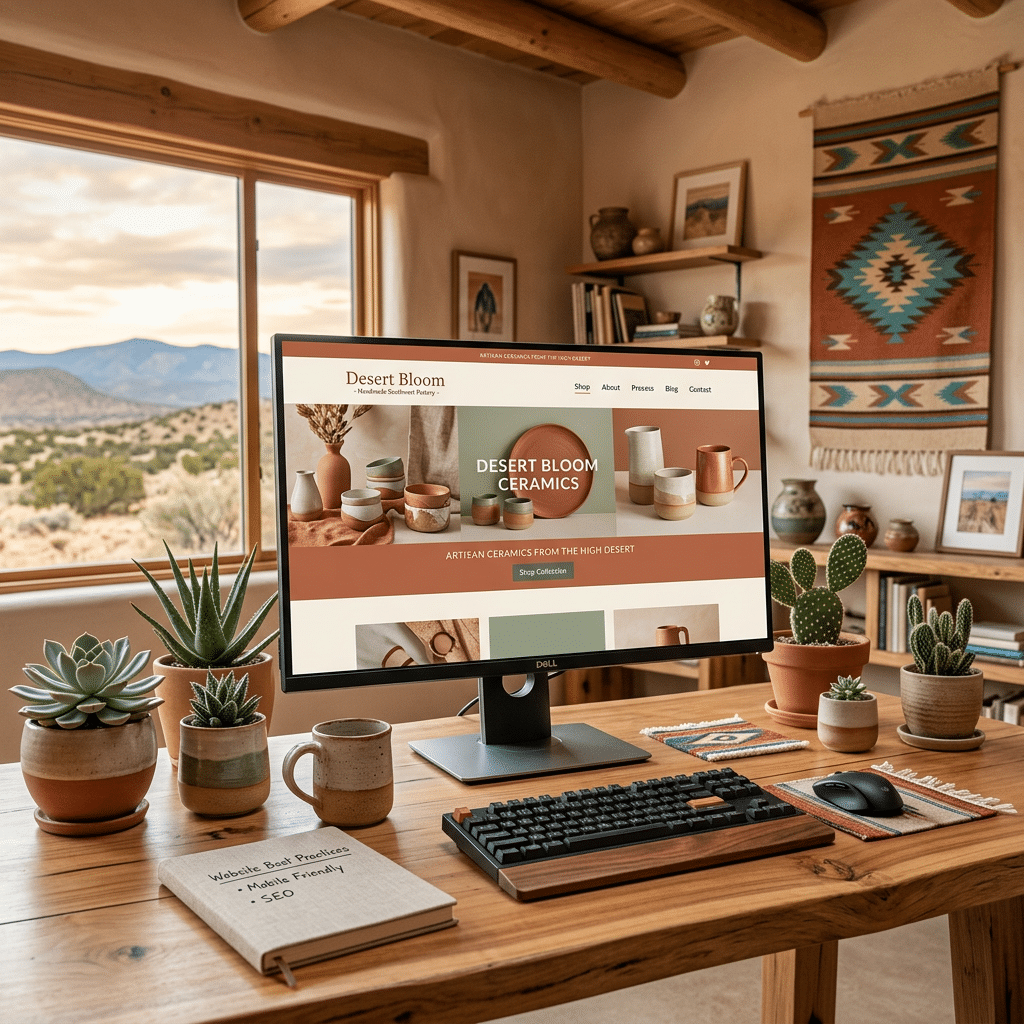
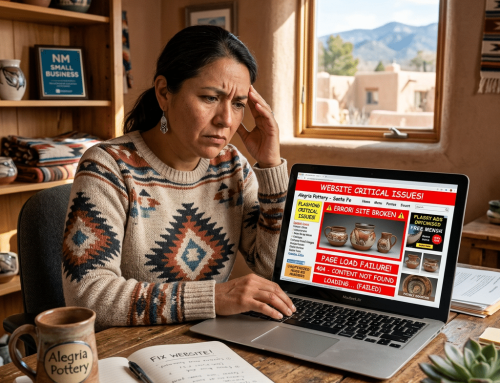
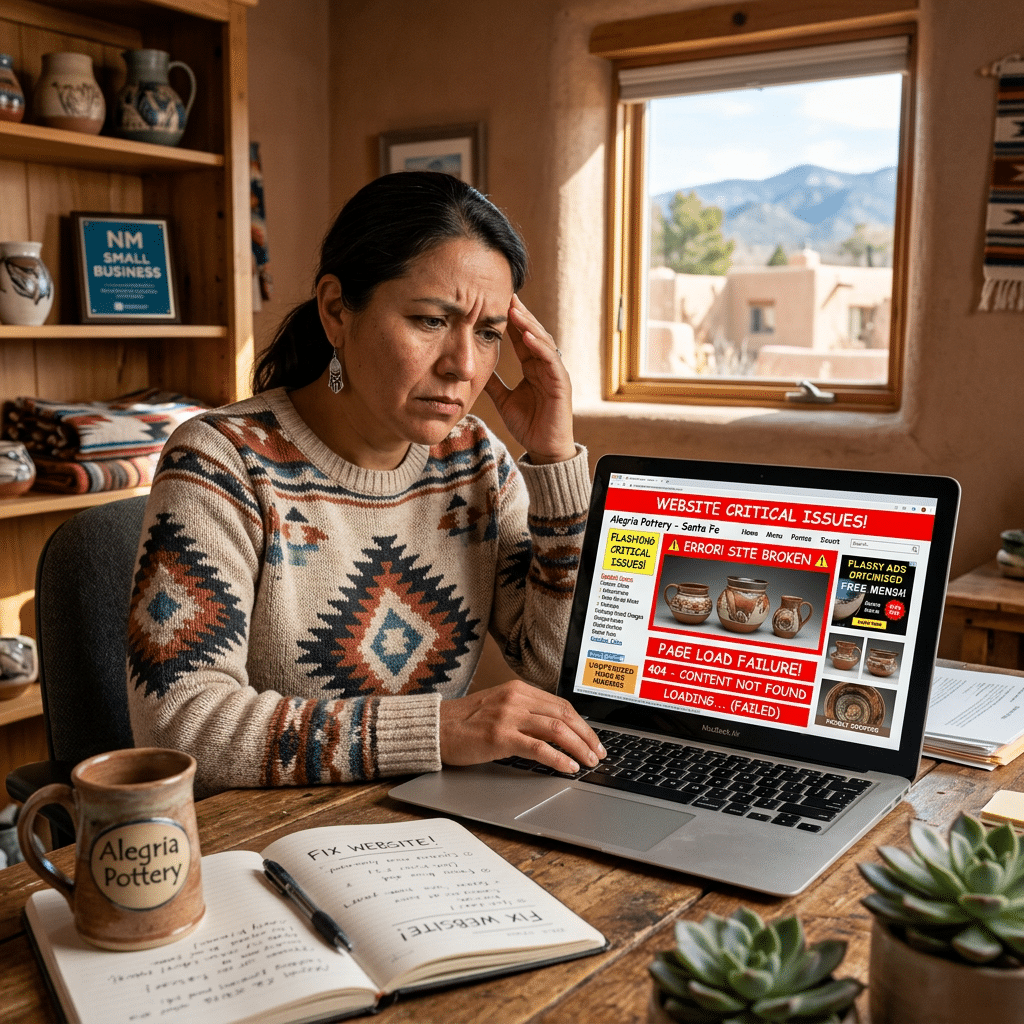
Not all websites are created equal. You’ve probably landed on a small business site and immediately felt something was off — cluttered layout, phone number impossible to find, looked like it was built in 2012 and never touched since. And you’ve probably also landed on a site that just felt right — clean, trustworthy, easy to navigate, made you want to stay. That feeling isn’t accidental. It’s the result of dozens of intentional decisions about design, content, performance, and user experience.
After building and managing websites for over 20 New Mexico businesses, here’s what I’ve learned separates a great small business website from one that’s just taking up server space. This is part of our complete guide to web design services in Albuquerque.
1. It Loads in Under Three Seconds — Every Time
Speed isn’t a nice-to-have feature anymore. It’s a dealbreaker. Research consistently shows that 53% of mobile users will abandon a page that takes longer than three seconds to load. For every additional second of load time, conversion rates drop measurably. And Google uses Core Web Vitals — specifically Largest Contentful Paint (LCP), Interaction to Next Paint (INP), and Cumulative Layout Shift (CLS) — as direct ranking signals.
The biggest speed killers on small business sites are almost always the same: uncompressed images (the #1 offender by far), too many plugins adding bloat, no caching configuration, and cheap shared hosting that bogs down under real traffic. A well-built WordPress site on quality managed hosting should consistently load in under two seconds. If yours takes five or more, you’re losing visitors before they ever see what you offer.
2. It Works Flawlessly on Every Device
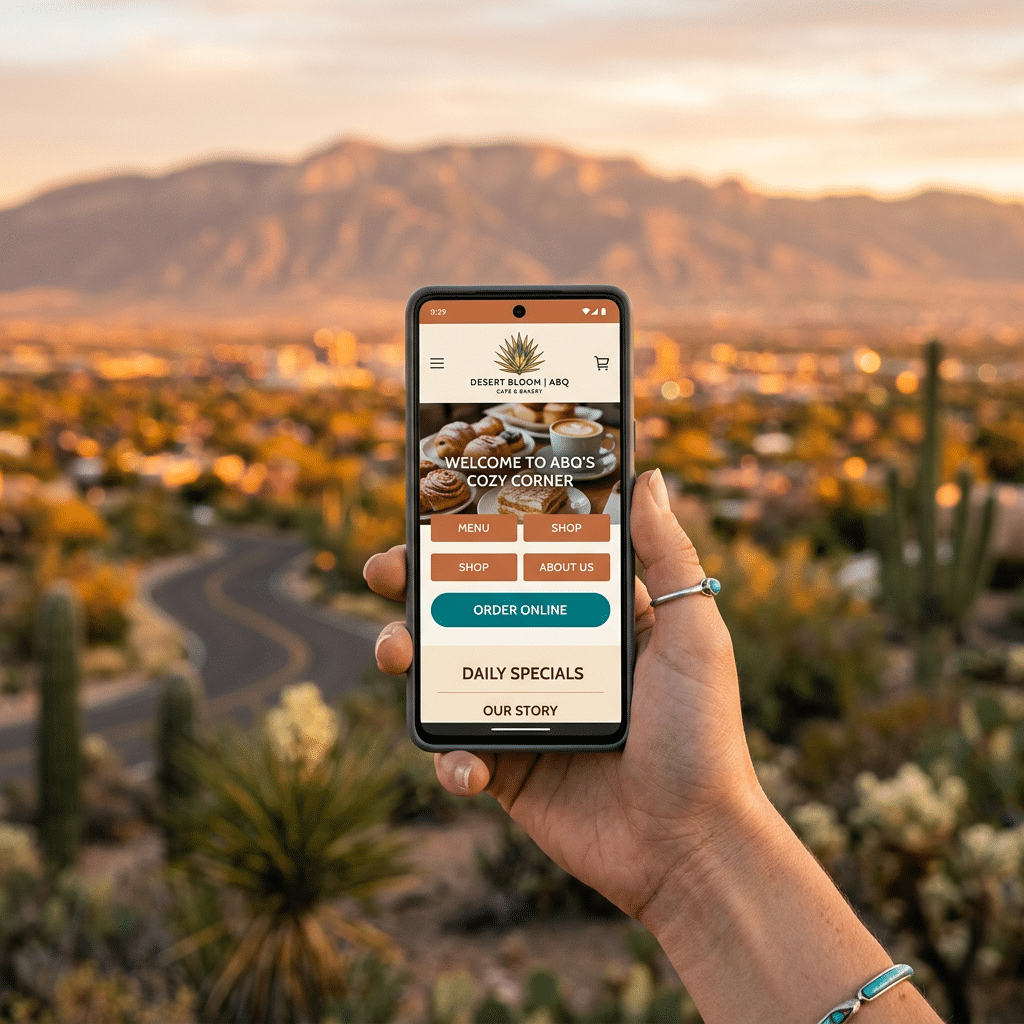
In New Mexico, the majority of local searches happen on a smartphone. Someone walking through Old Town looking for a restaurant, driving through the South Valley looking for a contractor, or sitting on their couch at 10pm researching their options — they’re on their phone. If your website pinches, zooms wrong, has tiny tap targets, hides content, or takes forever to load on mobile — you’re losing those customers every single day, invisibly, with no indication anything is wrong.
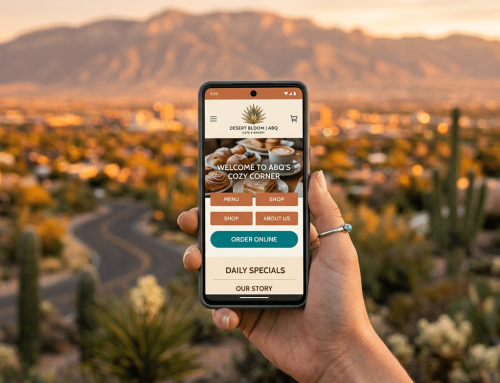
Mobile-first design means the phone experience is built first and scaled up to desktop — not the other way around. It means large readable text, thumb-friendly buttons, streamlined navigation, and optimized images that load fast on cellular connections. We cover this in depth in our article on Why Mobile-First Design Matters for Albuquerque Businesses.
3. The Next Step Is Always Obvious
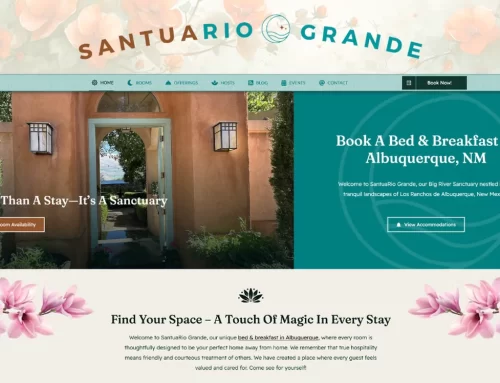
Every page on your website should answer one question for the visitor: what do I do next? A great small business site removes all friction between “I’m interested” and “I’m contacting them.” That means a prominent phone number above the fold on every page. A clear call-to-action button that stands out visually. A contact form that’s short, simple, and mobile-friendly. Directions that open in Google Maps with one tap.
The most common conversion problem we see on small business sites isn’t bad design — it’s ambiguity. Visitors arrive, they’re interested, and then they can’t figure out how to take the next step. They don’t hunt for it. They leave. Every week that your contact information is buried or your CTA is unclear is revenue walking out the door.
4. It Tells a Real, Human Story
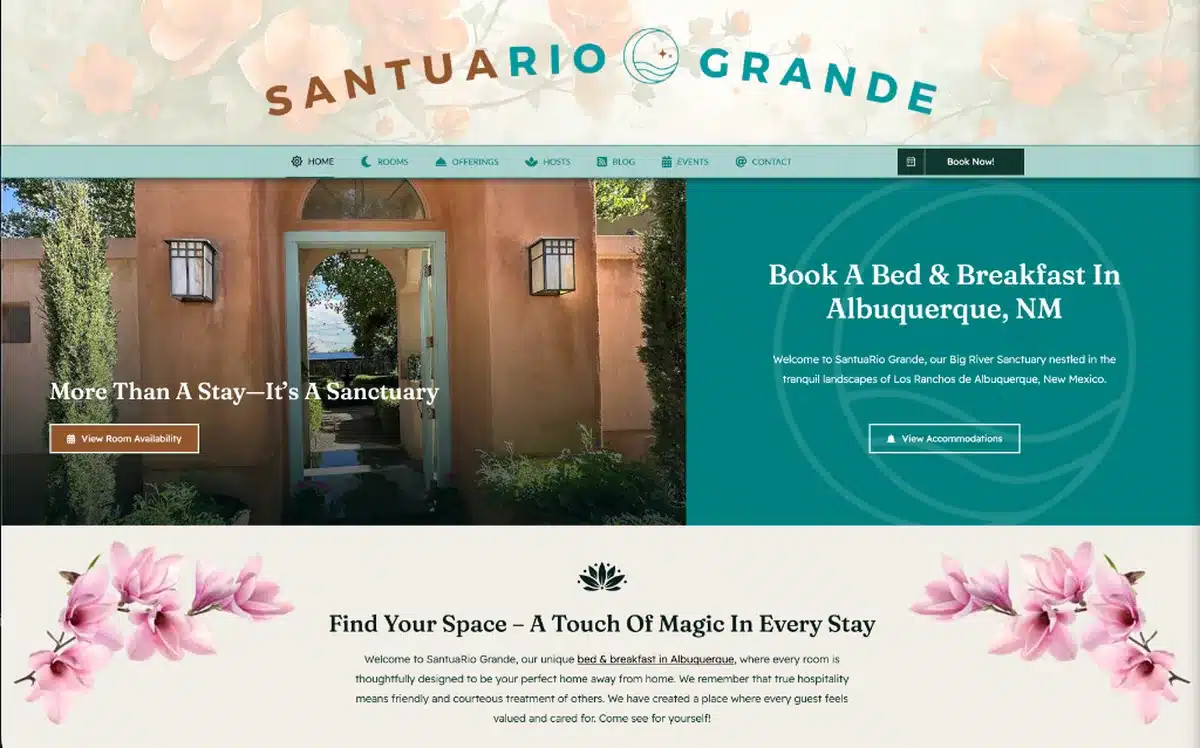
People buy from people they trust. A great small business website communicates who you are, what you stand for, and what it’s like to work with you — before a single conversation happens. That means real photos of your team, your space, your actual work — not stock images of smiling strangers in generic offices. It means an About page that sounds like a real person wrote it. It means testimonials from real clients with real names, not vague anonymous quotes.
For New Mexico businesses especially, local authenticity is a genuine competitive advantage. Customers here want to know you’re part of the community — that you understand the culture, the landscape, and the people. A website that reflects that connection builds trust faster than any amount of professional polish. This is where The Role of Branding in Web Design becomes critical — your visual identity and your words need to tell the same honest story.
5. It’s Built to Be Found
A beautiful website that nobody can find is just an expensive digital brochure. Every page needs a target keyword, a unique and compelling meta title, a descriptive meta description, proper heading structure (H1 → H2 → H3), enough body content for Google to understand the topic, and internal links connecting it to the rest of the site. This doesn’t happen automatically when a site is built — it has to be engineered in from day one.
Many small business owners are shocked to discover that their existing website, despite looking fine, has zero SEO structure underneath. No keyword targeting, default page titles, missing meta descriptions, images with filenames like “IMG_0047.jpg.” Google doesn’t rank sites that don’t give it the right signals. We include a full SEO foundation on every site we build — because ranking is the whole point. Read more in our article on What Is SEO and Why Every Albuquerque Business Needs It.
6. It Builds Trust Before a Word Is Read
Within three seconds of landing on your site, visitors are making a subconscious judgment about whether to trust you. Trust signals that make or break that judgment include: professional, consistent design; real reviews and testimonials with names and faces; credentials, certifications, and affiliations displayed prominently; a local phone number and physical address (not just a contact form); an SSL certificate (the padlock in the browser); and a site that clearly hasn’t been abandoned.
Missing any of these? Trust drops. It doesn’t matter how good your service is if your website doesn’t communicate it within the first few seconds of someone’s visit.
7. It Gets Better Over Time
The best small business websites aren’t static — they’re living assets that grow alongside the business. New services get pages. New client wins become case studies. New questions customers ask become blog posts that rank and attract traffic. Regular updates signal to Google that the site is active and maintained — which positively affects rankings over time.
A website is not a project you finish. It’s the most important marketing asset your business has, and it needs consistent attention to stay effective. Our web hosting and maintenance programs keep sites fast, secure, and evolving for our clients long after launch.
Ready to build something that checks every box? Explore our portfolio or start a conversation with us.