Redesigning Duende’s Lair: Navigating Challenges in Website Development
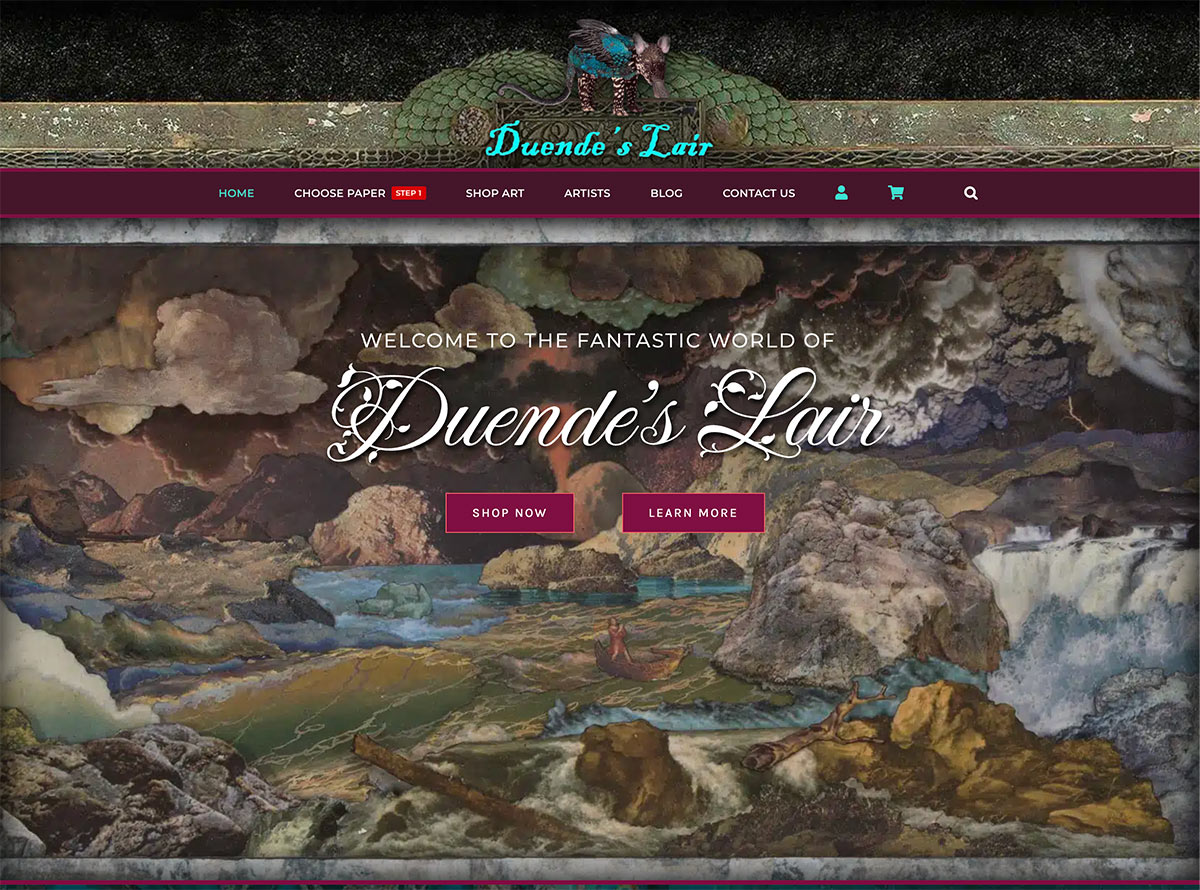
Designing and developing a website is never a straightforward process—especially when working to align with a strong creative vision, integrate technical solutions, and build engagement across platforms. When I set out to redesign Duende’s Lair, I knew the project would be complex, but I didn’t anticipate just how much I would learn along the way.
A website redesign project reveals everything about a business’s digital foundation — the good decisions, the technical debt, and the opportunities that were hiding in plain sight. In our experience, client case studies are the most underused content asset in the small business marketing toolkit. A detailed, honest look at a real project — like this one — builds more trust than any service page.
Over the course of four months, I encountered significant challenges in capturing the artistic essence of Carlos’s work, finding a reliable dropshipping solution, and launching an engaging online presence. Each challenge forced me to develop a process that not only solved immediate problems but also improved my overall approach to web design.
Capturing the Look and Feel of Carlos’s Vision
One of the biggest challenges in this redesign was ensuring that both the website and products reflected Carlos’s artistic vision. Initially, I incorporated elements I had created, but as the project evolved, it became clear that only Carlos’s work should be featured to maintain a cohesive and authentic brand identity.
The Struggle
Translating an artist’s vision into a digital space is incredibly challenging, especially when the work is deeply personal. I had to balance aesthetics, usability, and functionality while ensuring that every visual element aligned with Carlos’s intent. The process was made more difficult by the need to make the site not only visually compelling but also easy to navigate, ensuring that visitors could seamlessly browse through the artwork without losing the immersive experience that makes Duende’s Lair so unique.
How I Overcame It
I spent extensive time researching and analyzing Carlos’s work, breaking down its colors, textures, and themes. I also had direct conversations with him to understand his creative perspective better. From there, I refined the website’s layout, typography, and overall aesthetic to create a seamless online extension of his artwork. I also experimented with different design prototypes, testing user interactions and adjusting elements that didn’t align with the vision. By prioritizing Carlos’s original creations, I was able to bring his vision to life in a way that felt true to the brand while also ensuring the site remained user-friendly and engaging.
Finding a Dropshipping Solution with High-Quality Printing A major part of Duende’s Lair is selling fine art prints. However, finding a print-on-demand service that met our quality standards while integrating smoothly with WooCommerce was a major hurdle.
The Struggle
Many dropshipping services focus on efficiency but fall short on quality, especially when it comes to archival printing for artwork. I needed a solution that would ensure Carlos’s work was reproduced with high fidelity, using museum-grade materials. The challenge wasn’t just in finding a vendor—it was in ensuring that their processes aligned with our quality expectations, packaging requirements, and the logistical challenges of international shipping.
How I Overcame It
Duende’s Lair is a specialty retail shop in Albuquerque’s South Valley — a WooCommerce site with a deep catalog, a loyal customer base, and a backend that had accumulated years of technical debt. After researching multiple options, I discovered ThePrintSpace, an online service that offers high-quality archival printing with dropship capabilities. It seamlessly integrated with WooCommerce, making it the perfect fit. However, setting up over 1,000 product variations based on different paper types was no small feat. To streamline the process, I developed a structured workflow that automated as much as possible, reducing errors and ensuring a smooth e-commerce experience. I also rigorously tested the print quality, ordering sample prints and making adjustments to ensure that color accuracy, texture, and framing options met the highest standards. Through careful vetting, I was able to ensure that each print shipped to a customer would meet the same level of craftsmanship as the original artwork.
Launching and Building Hype on Social Media Even with a beautifully designed website and high-quality products, success depends on reaching the right audience. Social media was a critical component, but building engagement from scratch presented its own set of challenges.
The Struggle
According to Google Core Web Vitals documentation, consistent digital marketing investment is the single biggest predictor of small business growth over a 12-month period. Without an existing audience, gaining traction on social media can feel overwhelming. Algorithms favor consistent engagement, but starting from zero requires extra effort to break through the noise. The challenge wasn’t just in posting content—it was in ensuring that the brand had a distinct voice, an engaging visual identity, and a strategy that would resonate with Carlos’s audience while also attracting new followers who appreciate fine art.
How I Overcame It
I researched best practices for launching an e-commerce brand on social platforms and developed a content strategy centered around Carlos’s art. By creating a mix of behind-the-scenes content, process videos, and storytelling posts, I gradually built a following. I also engaged directly with the community, responding to comments and participating in relevant conversations. To boost visibility, I experimented with different content formats, including short-form videos, artist Q&A sessions, and collaborations with other creatives. Over time, this consistent effort began to generate organic growth and increased interest in Duende’s Lair. I also leveraged targeted ads and influencer partnerships to further expand reach, ensuring that the brand wasn’t just present but actively growing and engaging with the right audience.
- Research and Understanding: Take the time to fully grasp the vision behind your project. If you’re working with an artist, listen to their input and ensure their voice is reflected in the design. Research other successful brands in your niche to see how they handle similar challenges.
- Find the Right Tools: Whether it’s a dropshipping service or an e-commerce platform, research thoroughly to find solutions that align with your needs. Test different providers and don’t settle until you find one that meets your expectations.
- Develop a Process: When faced with overwhelming tasks (like creating 1,000 product variations), break the work into manageable steps and look for ways to automate. Build a workflow that allows you to stay organized and minimize errors.
- Engagement Takes Time: Building an online presence isn’t instant, but a thoughtful strategy and consistent effort will pay off in the long run. Don't be discouraged if initial results are slow—momentum builds over time, and persistence is key.
- User Experience Matters: A website isn’t just about looking good—it has to function well. Ensuring smooth navigation, quick load times, and a seamless checkout process is just as important as the aesthetics.
The Challenge: Redesigning a Complex WooCommerce Site
Redesigning an active ecommerce site carries a different risk profile than building one from scratch. Every change to URL structure, product categorization, or checkout flow has direct revenue implications if something breaks during the transition. The challenge is not just design — it is maintaining full functionality through a rebuild while the business continues operating.
For Duende's Lair, the additional complexity was a WooCommerce stack that had grown organically over years — custom product types, legacy plugins with interdependencies, and a customer base accustomed to a specific checkout experience. The redesign required a full inventory of what was working before touching anything, and a staged migration plan that allowed rollback at every phase.
A website is not a brochure — it is the 24-hour sales representative for your business. When it loads slowly, breaks on mobile, or confuses the first-time visitor, it does not just fail to convert. It actively damages the impression of your brand.
The Build: Key Technical Decisions
Every complex rebuild involves decisions with long-term consequences — choices about theme architecture, plugin dependencies, database structure, and performance strategy that are difficult to reverse once the site is live. Getting those decisions right at the planning stage is the work that clients rarely see but that determines whether a redesigned site performs better or simply looks better.
For this project, the key technical decisions centered on WooCommerce performance optimization, image delivery architecture, and caching strategy. A site with hundreds of product pages and dynamic inventory cannot be cached the same way a brochure site can. The build required server-level configuration changes alongside the front-end work to ensure the improved design did not come at the cost of load times.
Speed Optimization on an Image-Heavy Site
Lessons Learned: A Process for Tackling Design Challenges Throughout this journey, I gained valuable insights that apply to any complex web design project. For those struggling with similar challenges, here are some key takeaways: Redesigning Duende’s Lair was an intense but rewarding experience. The challenges I faced pushed me to think creatively, refine my problem-solving skills, and ultimately build a website that not only functions well but truly represents Carlos’s artistic world. If you’re navigating a difficult project, remember that every challenge is an opportunity to learn and grow. Stay persistent, stay flexible, and trust the process. Every obstacle is a chance to refine your craft, and with the right mindset, you’ll emerge with a better product and stronger skills than you started with.
Frequently Asked Questions
About the Author: Mike Jennings is one of the founders and lead developer at Design It Right, a national digital marketing agency. With over 30 years of experience building websites and growing businesses online, Mike has worked with clients across New Mexico, Texas, California, and beyond. Questions? Reach him at [email protected].
The most expensive part of a complex redesign isn't the build — it's the discovery work that gets skipped. Every hour you don't spend understanding the existing system before touching it costs you three hours in fixes later.
About the Author: Mike Jennings is one of the founders and lead developer at Design It Right, a national digital marketing agency. With over 30 years of experience building websites and growing businesses online, Mike has worked with clients across New Mexico, Texas, California, and beyond. Questions? Reach him at [email protected].